
Introduction
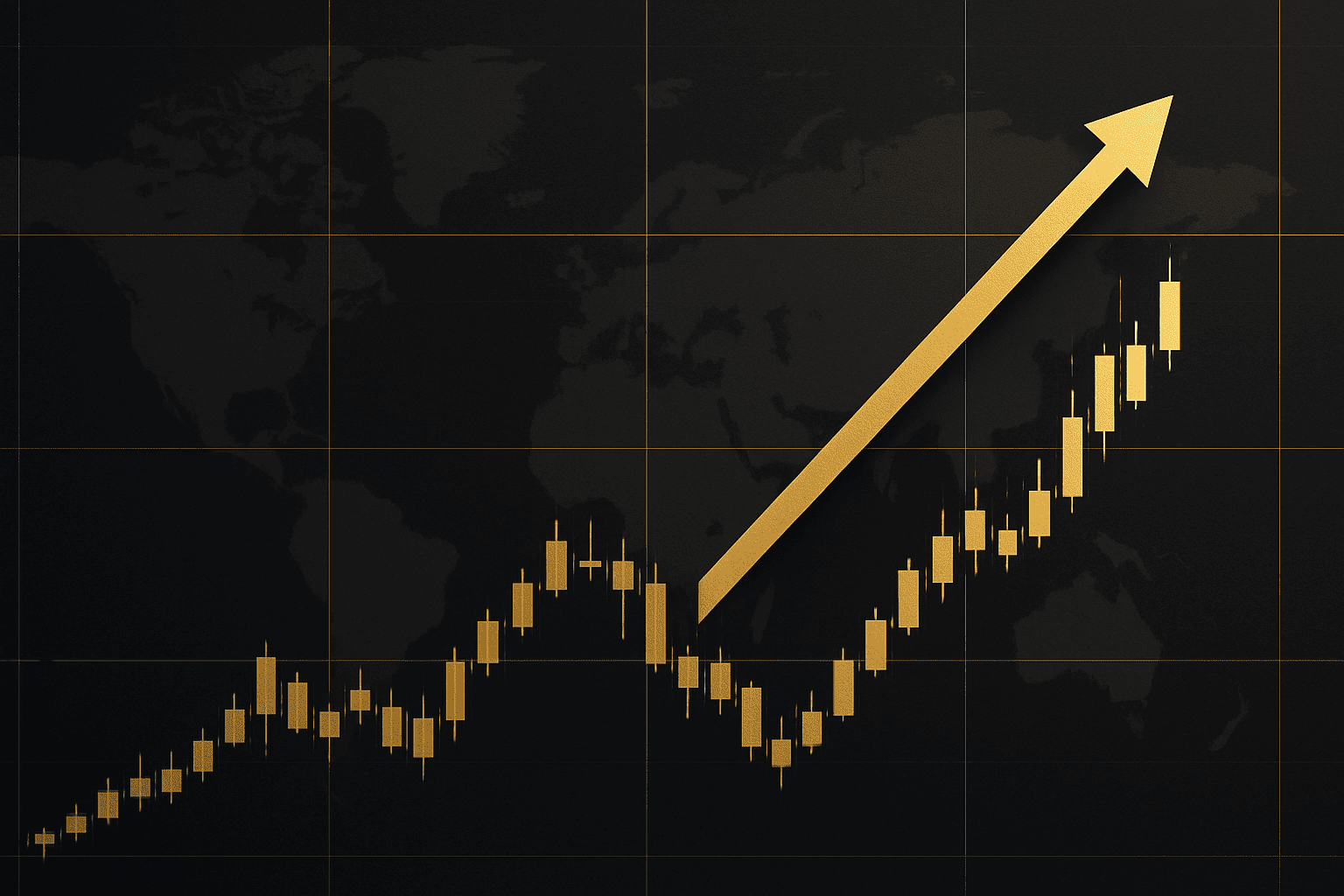
Gold climbed to record highs in a risk-off trading session as investors priced in renewed U.S.-China tensions and growing expectations that the Federal Reserve could ease policy later this year. The move underscores gold’s dual role as both an inflation hedge and a safe-haven asset during periods of market uncertainty.
What Happened
After weeks of steady accumulation by institutional investors, gold finally broke through a key psychological threshold, signaling renewed confidence in the metal’s long-term resilience. The rally was broad-based, driven not only by short-term trading momentum but also by the perception that gold remains a reliable store of value when policy clarity is lacking.
Despite thin liquidity in Asian trading hours, the move gathered pace in European and U.S. sessions, suggesting a sustained bid rather than a speculative spike.
- Spot gold hit a fresh intraday high near $4,000 per ounce, marking an all-time record.
- Silver and other precious metals followed suit, rallying in sympathy amid broad risk-off sentiment across global markets.
- The surge coincided with a sell-off in equities and a weaker U.S. dollar, further supporting precious metals.
Related reading: Latest gold spot prices
Why It Happened
The drivers behind gold’s surge appear deeply rooted in a combination of macroeconomic uncertainty and geopolitical risk. Renewed tensions between Washington and Beijing have reminded investors how quickly sentiment can shift in global markets. Meanwhile, expectations of looser monetary policy have amplified gold’s attractiveness as yields trend lower.
From a broader perspective, the rally can be interpreted as a defensive market repositioning — not exuberance, but caution. Investors are hedging rather than speculating, signaling a preference for safety amid policy ambiguity.
- Geopolitical tensions: Renewed U.S.-China trade frictions reignited demand for safe-haven assets.
- Monetary policy: Traders priced in potential Fed rate cuts, lowering the opportunity cost of holding non-yielding assets like gold.
- Inflation expectations: Continued stickiness in inflation data has kept real yields under pressure, benefiting gold’s appeal as a long-term hedge.
📘 See also: What “Fed easing” means for markets
What It Means for Readers
For long-term investors, the latest rally reinforces gold’s traditional role as a portfolio stabilizer during uncertain times. The metal continues to serve as a hedge against inflation, policy missteps, and currency volatility.
For short-term traders, however, the market’s sharp movements highlight the importance of discipline and technical awareness — especially near key resistance levels, where volatility can accelerate quickly.
- Investors: Gold remains one of the most resilient hedges against both inflation and geopolitical shocks.
- Traders: Expect volatility near key resistance zones; liquidity-driven spikes could offer tactical entry or exit points.
- Long-term outlook: As long as policy uncertainty and global tensions persist, safe-haven flows could sustain upward momentum.
Market Color and Expert Views
Market strategists largely agree that the recent move reflects a recalibration of risk appetite.
“This isn’t a bubble move — it’s a rational shift toward safety,” said a commodities analyst at London Metals Group. “When the policy path is unclear and inflation remains sticky, gold naturally takes center stage.”
Analysts also point out that, historically, such rallies tend to consolidate before extending higher, especially when accompanied by strong physical demand in Asia.
Key Levels to Watch
| Level Type | Price Zone | Market Implication |
| Support | $3,900–$3,930 | Potential retracement area |
| Resistance | $4,060–$4,100+ | Breakout zone if risk-off intensifies |
Quick Context: Historical Parallels
This surge mirrors prior gold rallies seen during global risk episodes, including 2020’s pandemic-driven flight to safety and the 2011 Eurozone crisis. Each cycle displayed the same dynamics — policy uncertainty, geopolitical friction, and a weakening currency backdrop.
The consistency of these patterns reinforces why gold remains central to global capital preservation strategies.
FAQs
What is driving gold today?
Trade tensions, Fed policy expectations, and broader risk-off sentiment are the main catalysts behind gold’s record run.
Where could gold move next?
If global risk factors persist, gold may retest higher levels — with resistance near $4,060–$4,100+ and support around $3,900–$3,930.
How does Fed policy affect gold?
Lower-for-longer interest rates support gold by reducing its opportunity cost; unexpected rate cuts can fuel additional upside.
How can I track gold prices in real time?
Follow trusted outlets like Kitco, Reuters, or FXStreet for live updates and chart analysis.
Is this outlook relevant for investors or traders?
Both — investors view gold as a hedge, while traders use technical levels for short-term strategies.